From photo to 3D figurine: what happens at each stage
A custom figurine from a photo takes several different forms before it becomes a physical object. The photograph describes the subject, the preview explores the idea, a technical model supports an estimate and a production file prepares the design for printing. Each answers a different question. Understanding that distinction makes it easier to judge what you are seeing.
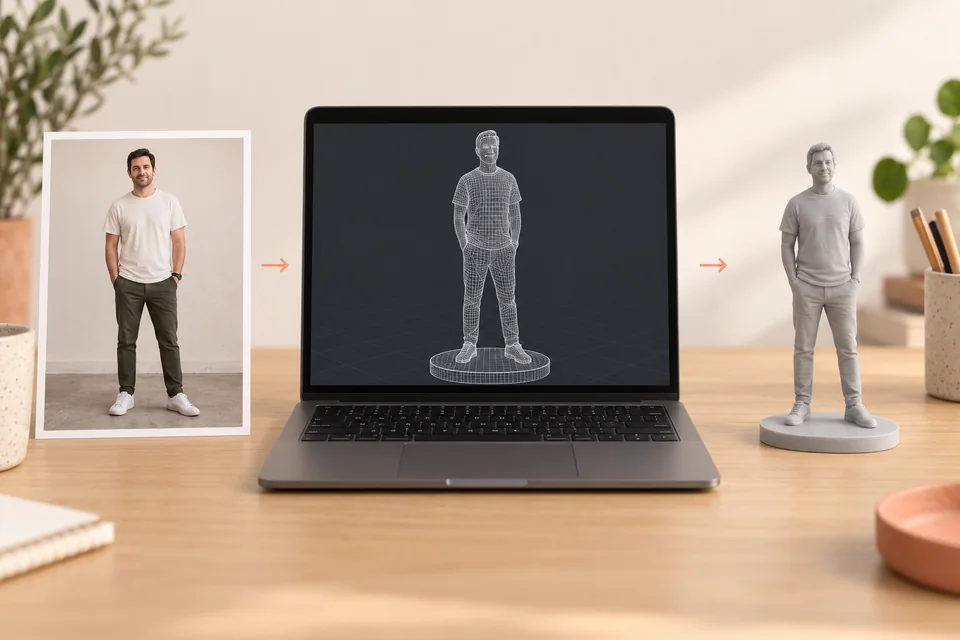
AI-generated illustration: the photo, digital geometry and physical object are separate stages. This is not documentation of a real order.
This guide explains the Formacara process and what to look for along the way. Knowing what to assess at each stage helps turn a personal idea into a clearer proposal.
1. The photograph: define what belongs in the figurine
A photograph contains much more than the intended subject. People in the background, furniture, shadows and incidental objects do not all need to become part of the design. Start by naming the person to include, the pose to preserve and any object that gives the moment its meaning.
For example: “The person in the middle, standing with the backpack. Keep the bent arm and leave out the railing.” This is a sample brief, not a completed customer project. Our photo selection guide explains how to choose a useful reference.
A photograph is not a body scan. A hidden hand or the back of a jacket has to be interpreted. If a particular detail matters, describe it explicitly rather than assuming the picture provides enough information to reproduce it exactly.
2. The preview: check the idea and composition
After you choose the subject, finish and colour, an AI-generated preview illustrates the proposal. Look first at the overall scene. Are the right people included? Does the stance convey the intended gesture? Is the essential accessory in the right place?
Then look for misunderstandings. A hand resting on someone’s shoulder tells a different story from an arm raised beside them. If something needs changing, describe the correction precisely and say which parts you want to keep.
The preview is an illustration, not a photograph of a real print. It does not establish that every feature is printable, and it does not guarantee an exact likeness. Colour and surface appearance can also differ from the physical object. The figurine uses one PLA filament, so the separate colours of clothing, skin and equipment are not reproduced individually.
3. The technical model: estimate at the selected size
The next stage creates three-dimensional geometry for estimating material and printing time. Size now has a practical meaning: a tall, compact figure occupies a different space from a couple with outstretched arms.
Once the technical model is ready, you can choose the height and wait for a fresh calculation. Read the results for the updated configuration; the previous size’s figures no longer describe the same proposal. The figurine size guide explains why width and depth matter alongside height.
The estimate model is not automatically the final production file. It helps assess the design, but it does not replace preparation and verification of the geometry intended for printing. For the commercial side, our pricing guide explains why estimated PLA consumption alone is not the selling price.
4. The production file: check the design that will be printed
Before real production, the actual printing model needs to be prepared and assessed at the intended size. If its geometry changes, dimensions, material requirements and printing time need to be checked against that version.
This matters particularly for thin elements, projecting accessories and points where two figures meet. A gesture that looks convincing in an illustration may need adjustments in the physical design. The aim is to preserve its meaning while assessing a workable shape. An attractive preview cannot provide that technical confirmation on its own.
5. Printing: the design becomes a physical object
Printing builds the PLA object layer by layer. Its shape, small details and surface therefore need to be considered as features of a physical piece. Illustrative images are not evidence that an object has been produced or that a finished print has been inspected.
If you are planning the figurine for an occasion, share the date through the Formacara contact form. Timing needs to be considered for the particular project.
Two common questions
If I like the preview, is the design ready to print? No. You have a visual proposal to assess. The estimate model and the preparation of the production file are separate stages.
Do I need to know how to use 3D software? You can begin with a photograph and a straightforward description. Your most useful contribution is to identify the people, the gesture and the details that matter.
Explore the process with your own photograph. Checkout is currently in test mode: a simulation does not start real production or dispatch.